
 1300 447 957
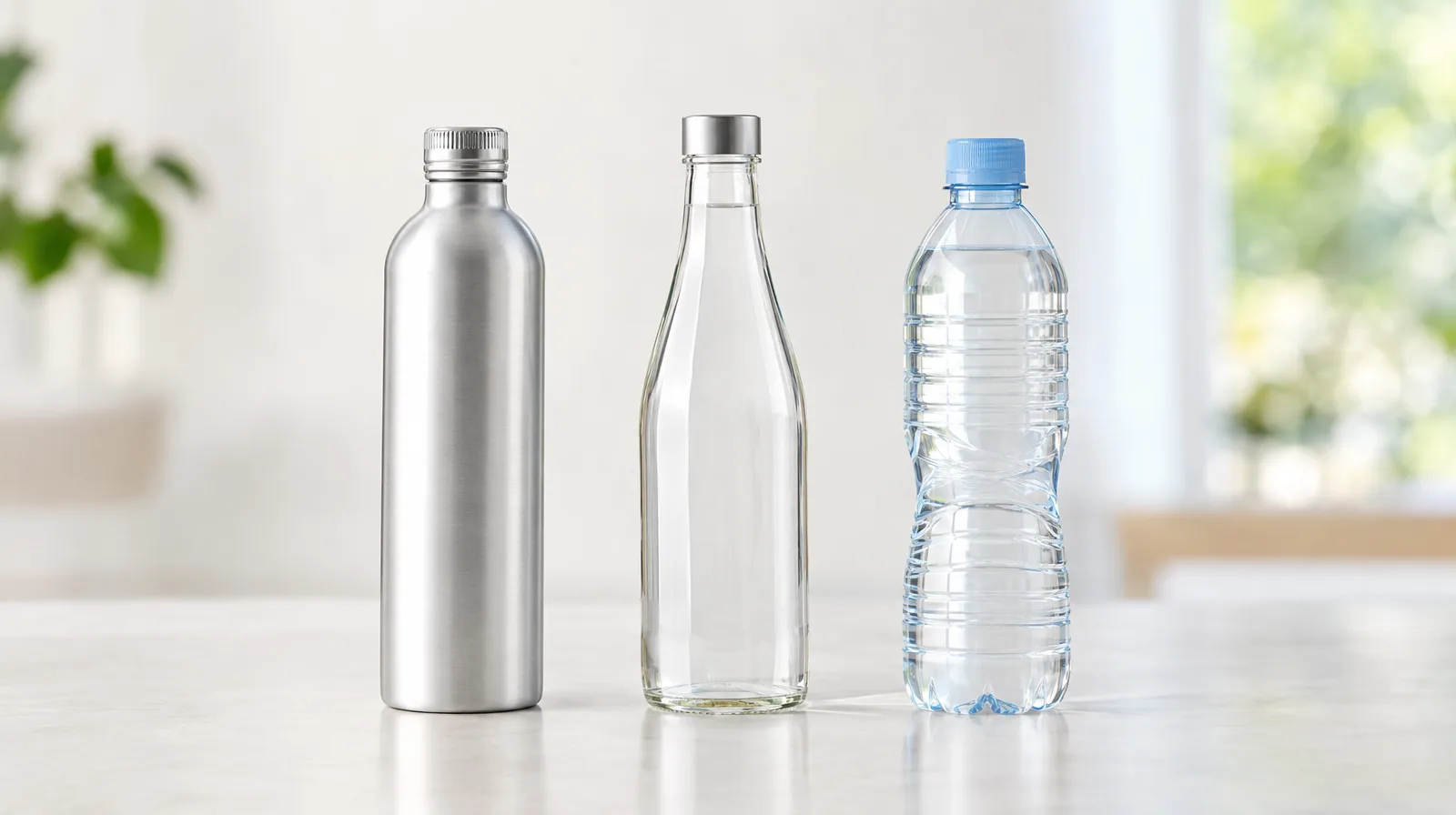
The right bottle or can material depends on how you plan to use it, who will receive it and what your brand needs to communicate. This guide compares aluminium, glass and plastic across cost, durability, sustainability and branding to help Australian businesses and event organisers make a clear, practical decision.
Why the Bottle Material Matters More Than You Might Expect
A bottle on a conference table or handed to a guest says something about your brand before anyone takes a sip. A glass bottle signals care and quality. Bottles made from fully recyclable pet can also signal care and quality and are more economical. Material choice is as much a branding decision as a logistical one.
Beyond appearances, the material affects how you transport, store, and handle your order on the day. Plastic is forgiving in a crowded stock room. Aluminium holds up in a festival bag but may not suit a fine dining table setting. These are practical trade-offs worth understanding before you commit to a bulk order.
There is also growing pressure from clients, guests and internal stakeholders to make responsible packaging choices. Increasingly, Australian businesses are being asked to account for the environmental credentials of their event materials, including bottled water. Choosing the right material means balancing presentation, practicality, budget and environmental considerations specific to your situation.
Aluminium Cans and Bottles
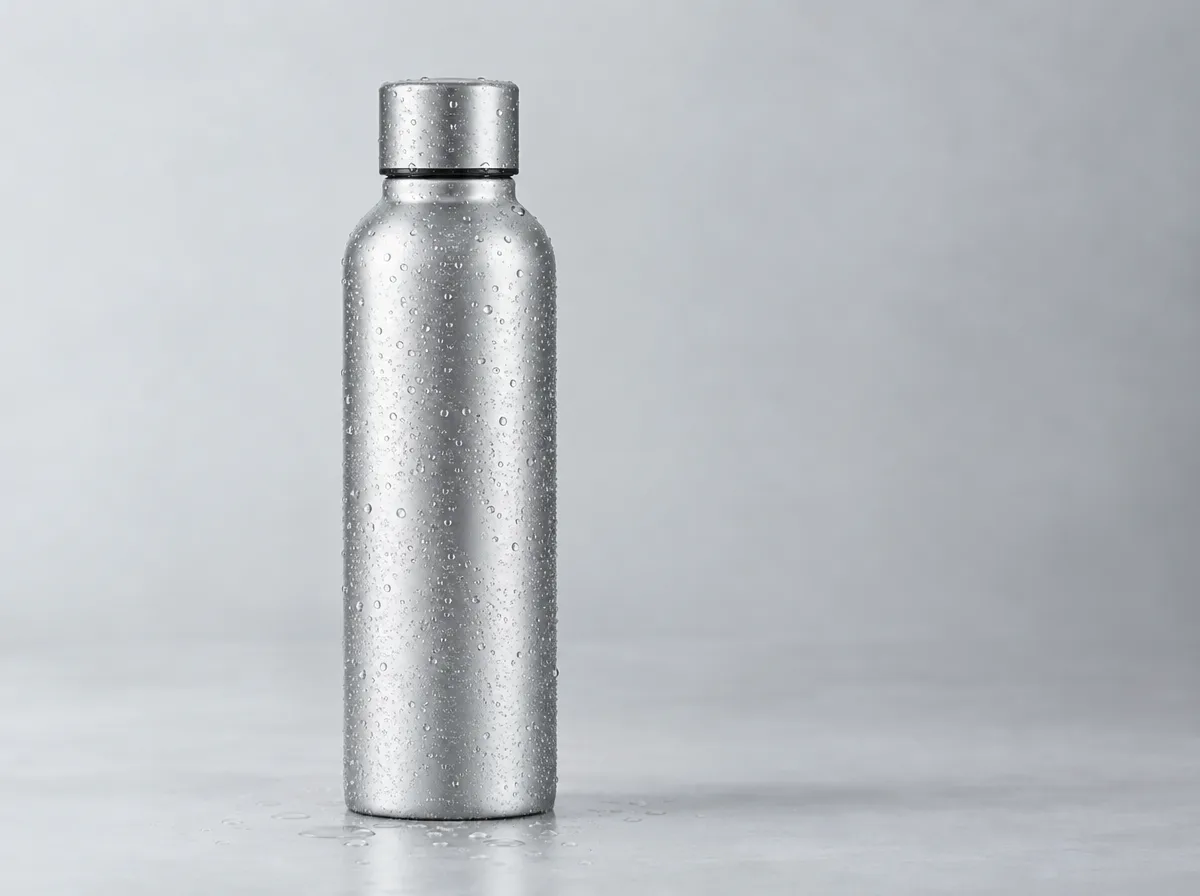
Aluminium bottles and cans are rigid, shatterproof containers made from aluminium alloy, commonly used for beverages at outdoor events, sporting activities and promotional campaigns where durability and portability matter.
What Makes Aluminium a Practical Choice
Aluminium is much lighter than glass, reducing freight costs on large orders. It is shatterproof, making it appropriate for environments where glass is a safety concern or outright prohibited, such as outdoor festivals, sporting events and school functions.
Aluminium also performs well in temperature extremes. Its insulating properties help keep beverages cold longer than plastic or glass in warm outdoor conditions. From a branding perspective, aluminium bottles and cans can be fully printed with amazing graphics. Branding is directly on the surface, so your logo and messaging stay visible for the can or bottle’s full lifespan.
Australian suppliers offer custom-branded aluminium cans and bottles, and because the bottle itself is reusable, the brand impression extends well beyond the event. A well-designed aluminium bottle that someone keeps on their desk or takes to the gym delivers ongoing visibility that a single-use plastic bottle cannot match.
Limitations of Aluminium Bottles
Most aluminium bottles include an internal liner, typically a polymer or epoxy coating, to prevent the metal from affecting the liquid’s taste. Check with your supplier, as the liner can affect recyclability claims depending on the liner type and local recycling infrastructure.
Some consumers report a faint metallic taste from aluminium bottles, particularly with lower-quality options. Reputable products with quality liners largely eliminate this, but it is a point worth raising with your supplier before committing to a large order.
Aluminium bottles also sit in a mid-range cost bracket. They are less expensive than glass per unit in most cases but cost more than standard PET plastic. For high-volume giveaways where cost is the primary driver, aluminium may exceed the budget.
Aluminium at a Glance
Strengths: Shatterproof, lightweight relative to glass, keeps beverages cold, supports durable printed or moulded branding, suitable for reuse.
Limitations: Internal liner may affect recyclability; mid-range cost per unit; may not suit formal dining settings; can dent under heavy impact.
Glass Bottles
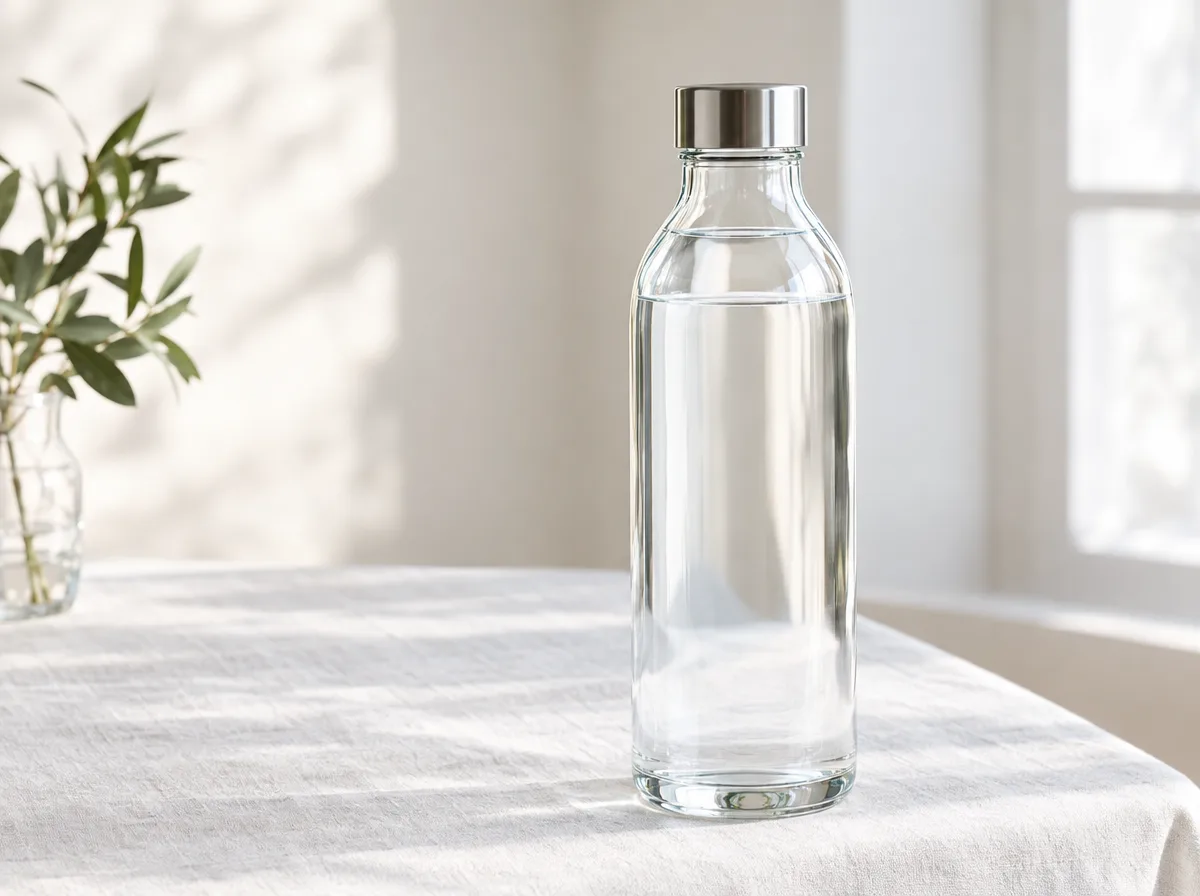
Glass bottles are made from silica-based materials that are chemically inert, meaning they don’t leach compounds into the liquid inside.
Where Glass Excels
Glass is taste-neutral. It contains no plasticisers or coatings that can influence the water’s flavour, which is why it remains the preferred format where the drinking experience itself is part of the product offering.
Visually, glass is unmatched. The weight, clarity and feel of a glass bottle communicate quality immediately. In on-table settings at corporate dinners, hotel rooms, weddings, and premium retail shelves, glass reinforces brand positioning in a way neither aluminium nor plastic can replicate.
Glass is also the most straightforward material to recycle from an environmental perspective. It can be recycled indefinitely without losing material quality, and it contains no polymer additives that complicate recycling. For businesses making environmental claims about their packaging, glass offers a clear, defensible recycling credential, provided it reaches the right collection stream.
Practical Challenges with Glass
Weight is the most significant operational challenge with glass. It increases freight costs, requires more careful handling during storage and transport, and strains staff at busy events. For large outdoor festivals or high-volume conference settings, the logistical burden is real.
Breakage is another major consideration. Many Australian outdoor event venues and council-managed parks prohibit glass. Even in controlled indoor settings, breakage during transport or setup creates waste and potential safety issues. Logistics planning for glass orders should account for a breakage allowance.
Per-unit cost for glass is higher than plastic and comparable to or above aluminium depending on the volume and the specific product. When you factor in additional freight costs due to weight, glass is consistently the most expensive option to get from the supplier to the event.
Glass at a Glance
Strengths: Premium appearance, taste-neutral, infinitely recyclable, preferred in hospitality and fine dining, strong environmental credentials.
Limitations: Heaviest material (highest freight cost), breakage risk, often prohibited at outdoor events, higher cost per unit.
Plastic Bottles (PET)
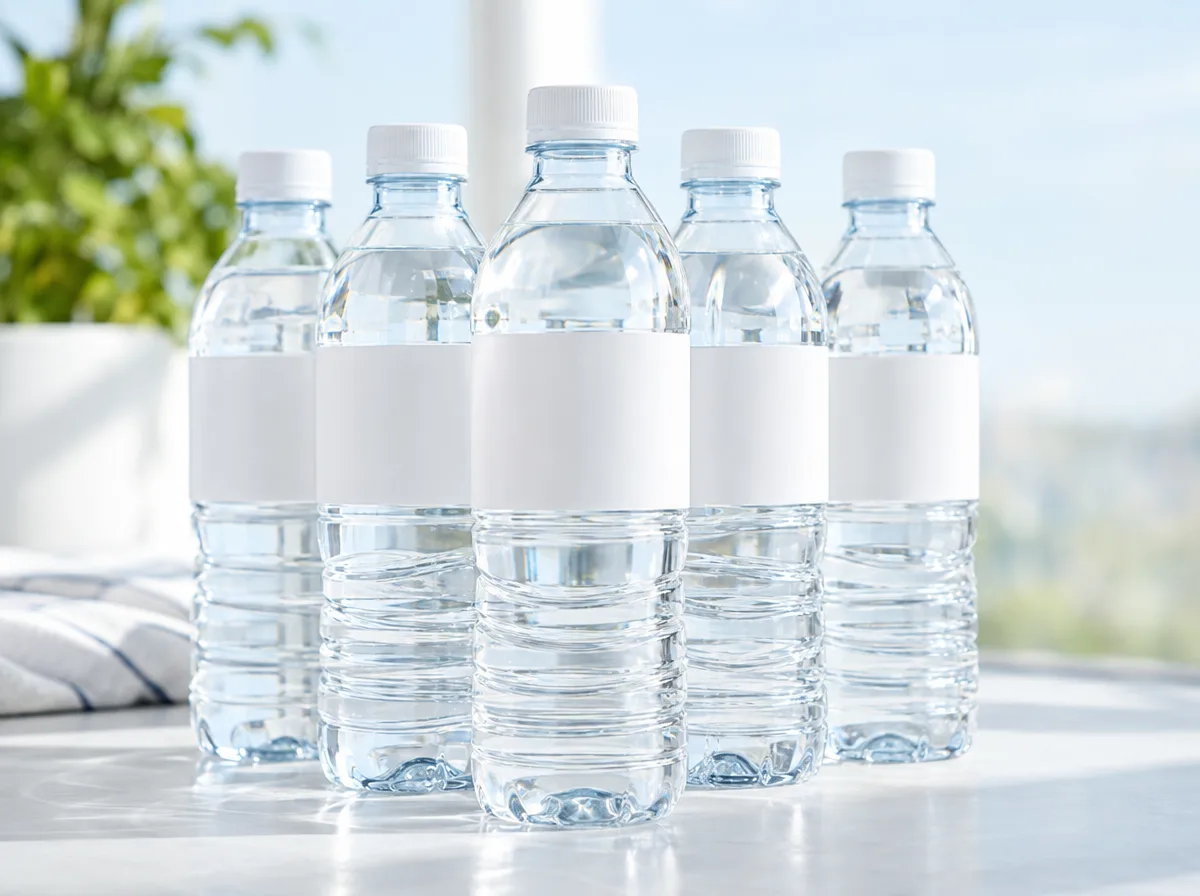
Plastic water bottles used in Australia are typically made from PET (polyethylene terephthalate), a food-safe material that is lightweight, flexible and widely available in custom-labelled formats from Australian bottled water suppliers.
Why Plastic Remains Widely Used
Cost is the main reason. PET plastic is consistently the lowest-cost option per unit across all three materials, especially at high volumes. For large events that need hundreds or thousands of bottles and where budget is the primary constraint, plastic makes the numbers work.
PET is also the lightest of the three materials, which simplifies logistics considerably. Lower freight costs, easier handling on-site and no breakage risk make plastic the most operationally convenient format. Custom labelling is straightforward and flexible: labels can be updated between orders to reflect different campaigns, events or messages without changing the bottle itself.
PET plastic is considered food-safe for single-use consumption. Food Standards Australia New Zealand (FSANZ) oversees food contact material standards in Australia, and PET bottles used by reputable suppliers are produced to meet those standards.
The Genuine Trade-Offs
PET is recyclable through kerbside collection in most parts of Australia. Still, actual recycling rates depend on local council infrastructure and whether end users sort the bottle correctly. Recycling outcomes vary between states and even between council areas, so the recyclability claim needs qualification depending on where your bottles are distributed. Some Australian organisations and event venues have internal policies that restrict or discourage single-use plastic. If your audience includes environmentally conscious guests or your brand has public sustainability commitments, this is a legitimate risk to factor in.
PET bottles are not designed for repeated reuse. They are suitable for single use and should not be refilled repeatedly.
Plastic at a Glance
Strengths: Lowest cost per unit, lightest weight, simplest logistics, flexible custom labelling, food-safe for single use, widely available.
Limitations: Single-use only, recycling rates vary by location, may conflict with sustainability commitments.
Side-by-Side Comparison
| Factor | Aluminium | Glass | Plastic (PET) |
|---|---|---|---|
| Weight | Light | Heavy | Very Light |
| Durability | High (shatterproof, can dent) | Low (breakage risk) | High (flexible) |
| Recyclability | High (check liner type) | Very High (infinitely recyclable) | Moderate (infrastructure-dependent) |
| Custom Branding | Moulded, printed or wrapped | Etched, screen printed, labelled | Label only |
| Cost Per Unit (Bulk) | Moderate | Moderate to High | Low |
| Best Suited For | Outdoor events, sport, festivals | Hospitality, fine dining, premium retail | High-volume events, cost-sensitive campaigns |
| Temperature Performance | Good | Moderate | Moderate |
Which Bottle Should You Choose? A Guide by Use Case

Corporate Events and Conferences
Glass is the stronger choice for seated formal events where the table presentation reflects on your brand. The weight and visual quality of a glass bottle on a conference table communicate professionalism in a way that plastic cannot. For standing receptions, breakout areas, or informal networking sessions within the same event, aluminium is a practical alternative that removes the risk of breakage without sacrificing the impression of quality.

Outdoor Festivals and Sporting Events
Aluminium or plastic are the appropriate options here. Glass is a safety hazard in most outdoor settings, and many Australian councils and event venues have explicit restrictions on glass containers at public events. Between aluminium and plastic, aluminium offers a more durable and reusable format that responds to growing sustainability expectations. For very large attendee numbers where cost per unit is critical, labelled PET plastic remains the practical standard.
Promotional Giveaways and Marketing Campaigns
The purpose of a promotional bottle is to carry your brand and keep it visible. A custom-branded aluminium bottle with moulded or printed branding achieves this far more effectively than a labelled plastic bottle because the brand stays on the bottle as long as the recipient uses it. If the campaign objective is maximum reach at minimum cost and individual bottles are unlikely to be kept, labelled PET plastic at high volume is a reasonable trade-off.
Hospitality and Premium Retail
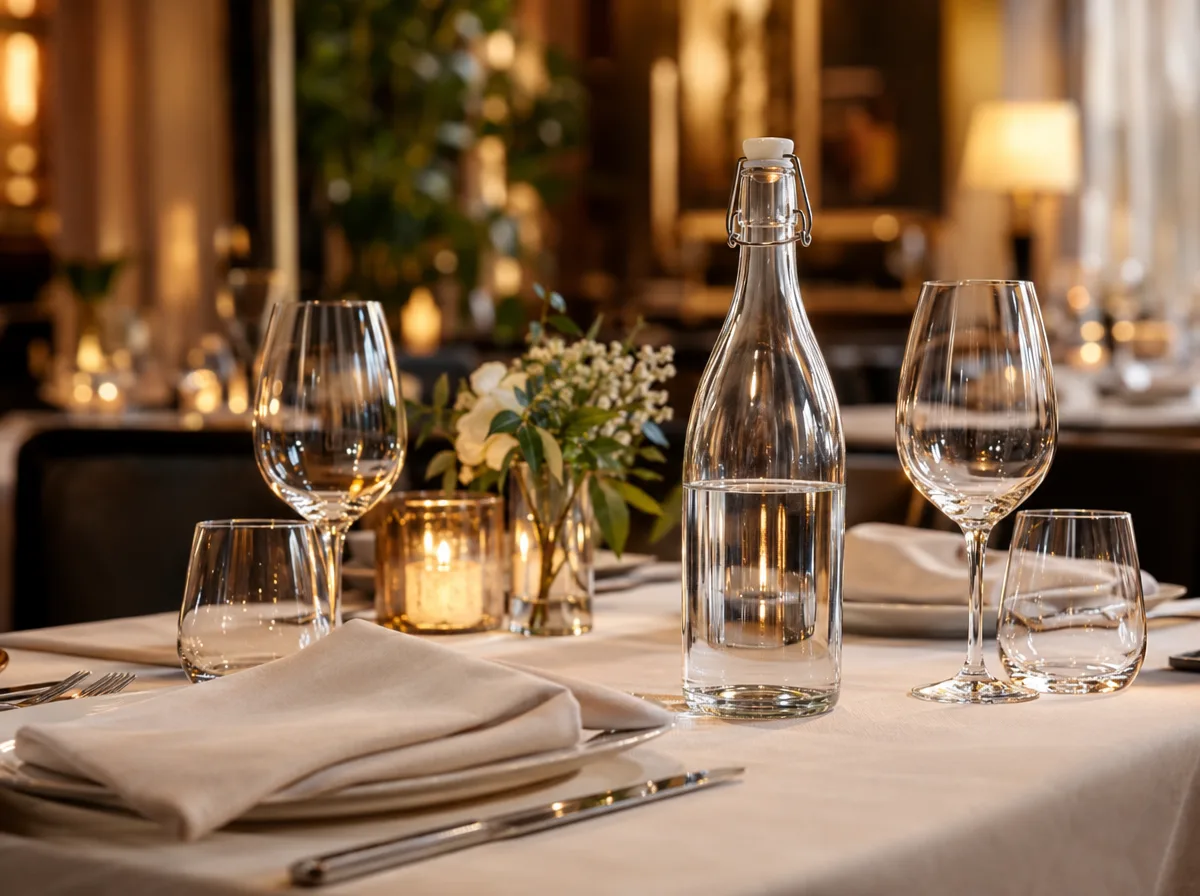
Glass is the standard in fine dining restaurants, hotels and premium retail environments. The breakage risk and handling requirements are manageable in controlled service settings, and the visual impression glass creates is not replicated by the other two materials. For businesses positioning themselves at the premium end, glass is the appropriate choice.
Weddings and Private Functions
Glass suits formal indoor receptions and seated dining. For outdoor ceremonies, garden receptions, or casual functions where guests move between areas, aluminium is more practical. Plastic is generally unsuitable when brand presentation and guest experience are central to the event.
Environmental Considerations for Australian Buyers
All three materials are recyclable in Australia, but the real-world outcomes differ and are more nuanced than a simple ranking.
Glass has the strongest environmental recycling credential. It can be processed and reformed indefinitely without degrading in quality, and it contains no polymer components that complicate the recycling stream. For buyers who need to make a defensible public claim about packaging recyclability, glass is the clearest case, assuming the bottles are collected correctly.
Aluminium is one of the most widely recycled materials globally, and its recycling process is well established. The internal liner present in many aluminium water bottles adds a complication worth understanding. Buyers should ask their supplier directly about the liner material and whether it affects recyclability in Australian processing facilities.
PET plastic is technically recyclable and accepted by most kerbside collection services in Australia. The practical challenge is that recycling outcomes depend on how well households sort the bottle and on the processing capacity of local council infrastructure, which varies by state and region. The Australian Packaging Covenant Organisation (APCO) and local council resources such as Recycling Near You (recyclingnearyou.com.au) provide state-specific guidance on what is accepted where.
No single material has a straightforward environmental record when you consider the full lifecycle. Production energy, transport weight, end-of-life outcomes and the likelihood of actual recycling all contribute to the total picture. A glass bottle that travels interstate adds significant carbon to the freight calculation. An aluminium bottle that ends up in landfill does not deliver on its recycling potential. The honest approach for buyers is to understand the specific trade-offs of the exact product they are ordering rather than relying on material-level generalisations.
Businesses making public sustainability claims about their event packaging should verify the specific recyclability information for their chosen product directly with their supplier.
Branding and Presentation Options in Australia
Custom labelling for PET plastic bottles is the most common and flexible branding format. Labels can be updated quickly between campaigns, and minimum order quantities are generally accessible for businesses of varying sizes. The limitation is that a label applied to a generic bottle shape doesn’t offer the same visual distinction as a fully branded bottle.
Aluminium bottles support moulded branding, direct printing and full wraps, giving a more permanent and distinctive brand presence. Because the branding is part of the bottle rather than an applied label, it lasts the product’s full life. This format is well-suited to promotional items that are intended to be kept and used beyond the event.
Glass branding options include screen printing, etching and labelling. For premium hospitality settings, screen-printed or etched glass delivers a finish that reinforces a high-end brand position effectively.
Lead times for custom-branded products vary by material, supplier and order volume. Custom-branded aluminium and glass bottles generally require more production lead time than labelled plastic bottles. Businesses ordering for a specific event date should confirm lead times directly with their supplier well in advance. At Source Direct, we have over 20 years of experience in wholesale and custom-labelled bottled water and can advise on lead times and minimum quantities across different formats.
Frequently Asked Questions
Is aluminium or glass better for the environment?
Both materials have strong recycling credentials compared to plastic. Glass can be recycled indefinitely without quality loss, which is its clearest environmental advantage. Aluminium is also highly recyclable, though the internal liner used in many water bottles can add complexity to the recycling process. The better choice depends on the specific product and how it will be collected and recycled after use.
Are plastic water bottles safe to drink from in Australia?
PET plastic bottles used by reputable Australian bottled water suppliers are considered food-safe for single-use consumption under standards overseen by Food Standards Australia New Zealand (FSANZ). They are not designed for repeated refilling and reuse.
Which bottle type is best for a corporate event?
For formal seated events, glass is generally the stronger choice because of its visual quality and premium presentation. For standing or informal settings within the same event, aluminium is a practical alternative. Plastic is suitable for very high-volume events where budget is the primary constraint.
Can I get custom-branded water bottles in Australia?
Yes. Custom-branded water bottles are available across all three materials from Australian suppliers. Plastic bottles are typically custom-labelled; aluminium bottles can carry moulded, printed, or wrapped branding; and glass bottles can be screen printed, etched, or labelled. Minimum order quantities and lead times vary by supplier and format.
What is the cheapest bottle material for bulk orders?
PET plastic is consistently the lowest-cost option per unit, especially at high volumes. Aluminium sits in a mid-range price bracket. Glass is generally the most expensive when you factor in both the per-unit cost and the additional freight cost from its weight.
Do aluminium bottles affect the taste of water?
Aluminium bottles include an internal liner that separates the liquid from the metal surface. Quality liners largely eliminate any taste variation. Some consumers report a faint metallic taste in lower-quality products, so ask your supplier about the liner specification before placing a large order.
Which bottle material is safest for outdoor events?
Aluminium and plastic are the safest options for outdoor events. Many Australian outdoor venues and council-managed public spaces prohibit glass because breakage poses an injury risk. Aluminium offers durability without the fragility issue and is generally preferred over plastic where sustainability perception matters.


